One real problem.
One shipped product.
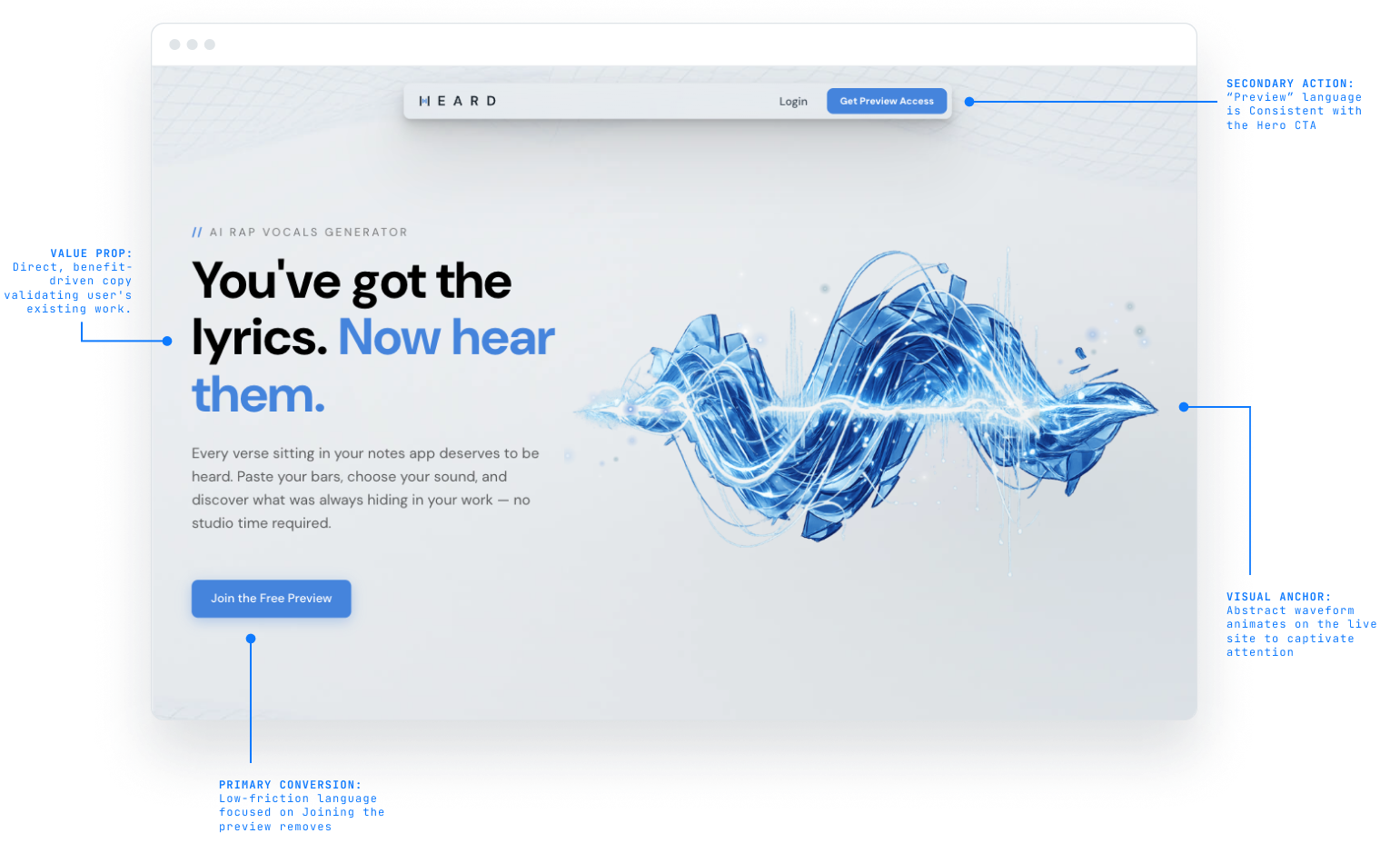
HEARD — A lyric-first music tool that turns written words into produced demo tracks using AI. Built by a lyricist who had the same problem as all lyricists.
One builder. With AI as a collaborator, every discipline — research, design, engineering — moved faster and reached further because of it.
Designers can ship. The designer who understands the problem deeply and can direct AI precisely can now own the full product — from insight to working software.
Vibe-coded and AI-powered. Lyrics to demo track in minutes.
Total build time across research, design, engineering, and deployment — solo.
Deployed and accessible. Real users, real feedback, real iteration.
How can a lyricist now hear their words without a studio, a producer, or weeks of effort?
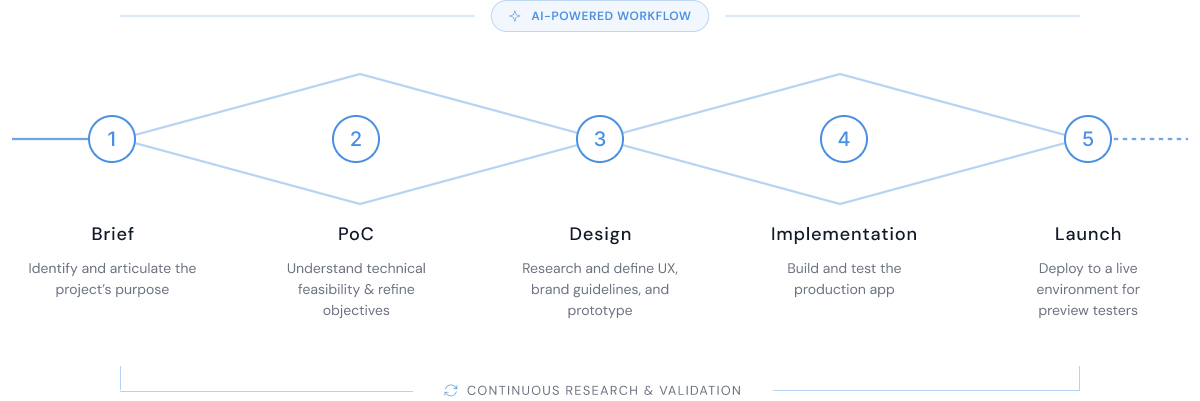
Classic Double Diamond.
Accelerated with AI.
A north star
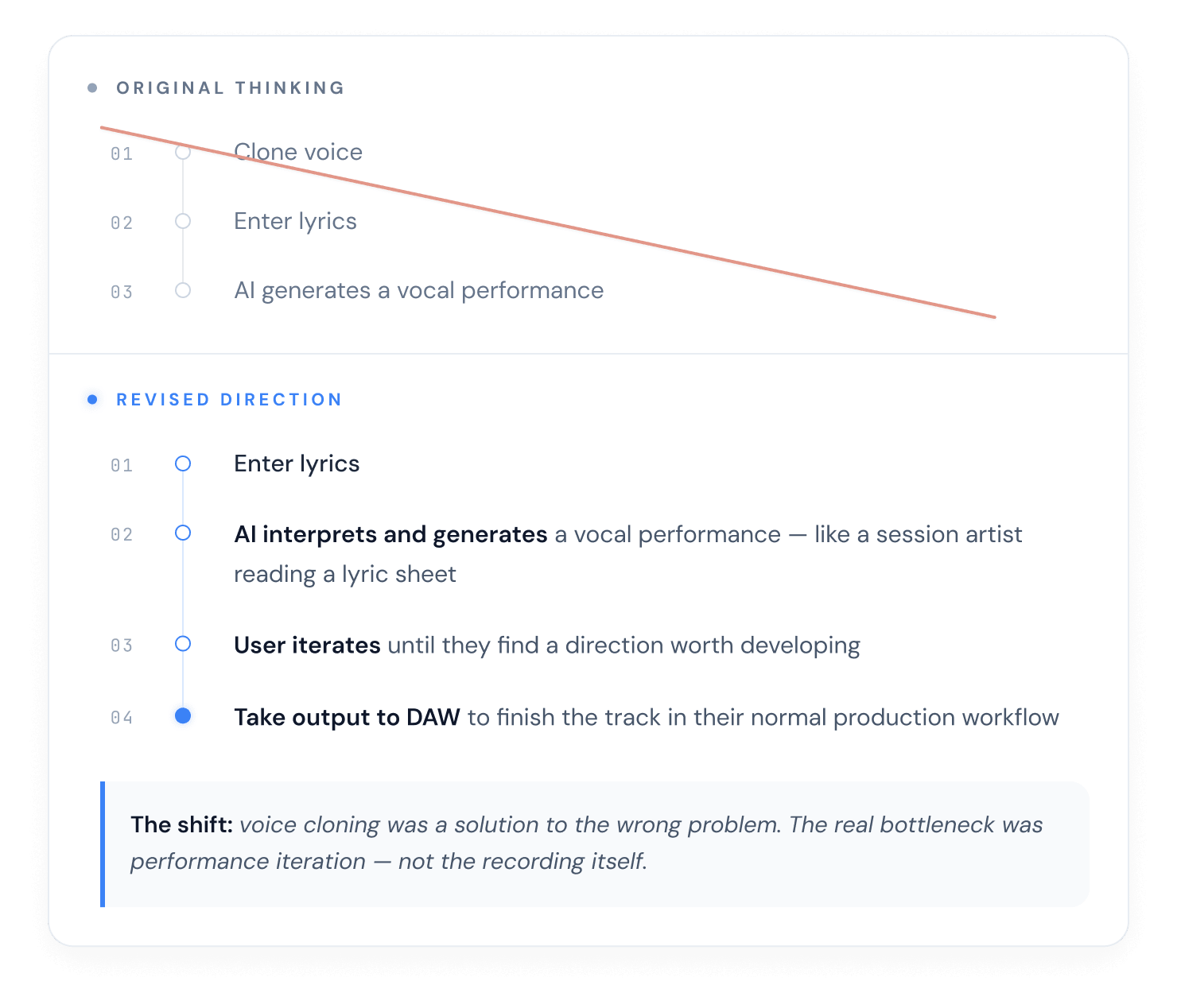
My initial idea was simple: clone my voice, feed it my lyrics, and have AI generate a complete song. The scope was intentionally narrow. The goal was to find out whether this was even possible and, if so, can I build it.
Two reasons drove me forward. I'm a lyricist with years of written work I'd never heard produced. And I'd been asking whether a designer with the right experience could ship a real product alone, using AI as the implementation layer. That was the brief. A North Star.
Refining the idea
Working prototypes with real code are the new wireframes. Before any design work started, I tested three voice cloning APIs, UberDuck, Kits.ai, and ElevenLabs, building functional prototypes at each step to pressure-test the concept against reality.
Three things came out of the PoC that shaped everything downstream.
- The technology pivot: diffusion models (trained on actual songs rather than spoken dialogue) produced performances that felt musical because they were shaped by music. I rebuilt the prototype around Suno via the Kie AI service and the difference was immediate.
- The product reframe: I didn't need a voice cloning tool. I needed an AI session artist, something that could interpret my lyrics, generate multiple performances, and give me a reference point to iterate from. Voice cloning was a solution to the wrong problem.
- A new research method I'd use again in the design phase: role-separated AI interviews, where the distance between researcher and subject is the mechanism that makes honest findings possible.
The PoC didn't validate the idea. It replaced it with a better one.
Workflow refinement based on AI assisted self-interview
Outputs of different APIs during PoC phase
Where the product took shape.
The POC answered whether this can be built and how. The design phase is where everything else got decided: what the product would be called, what it would look like, and what it would feel like to use.
Usability research: finding the real friction
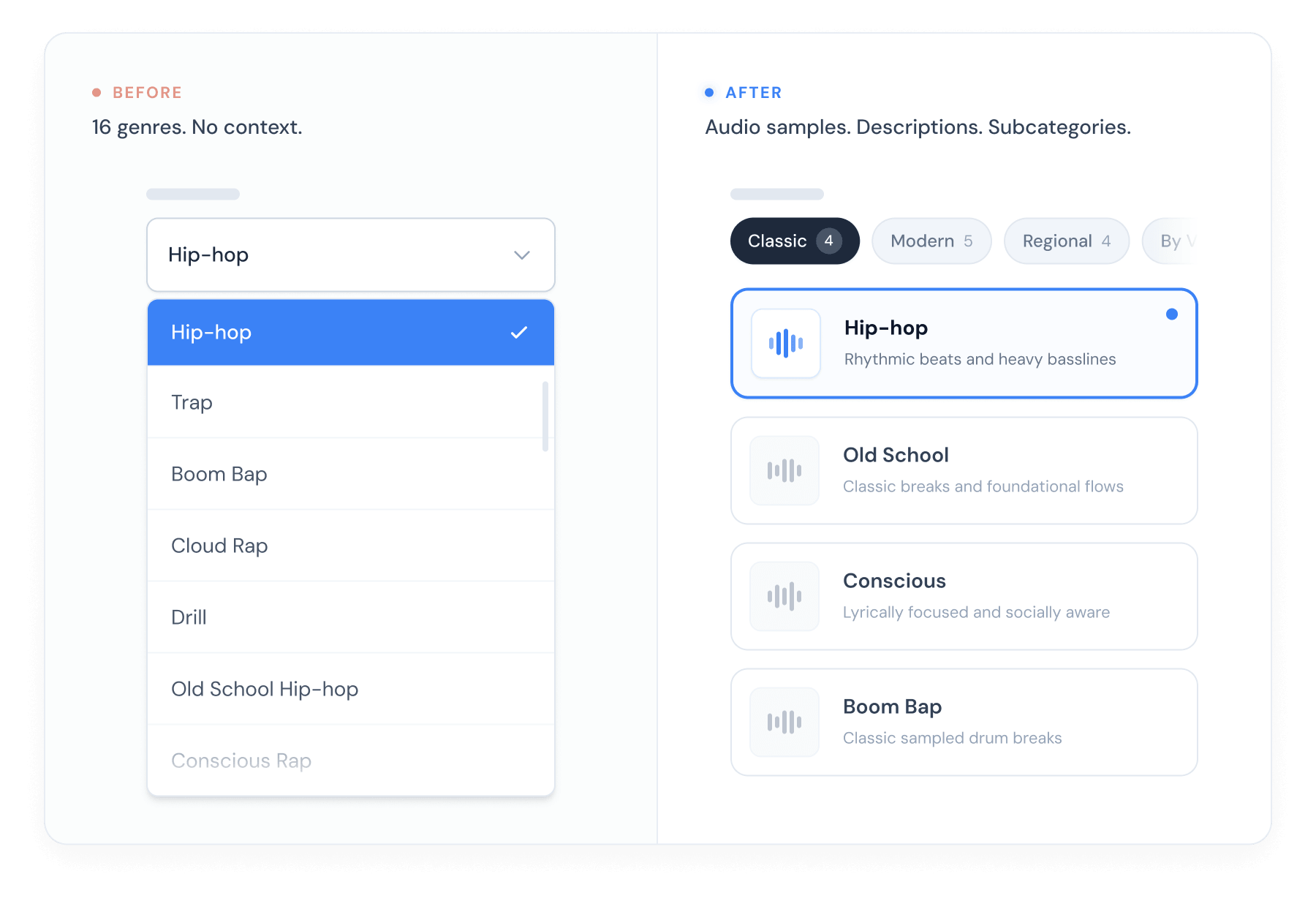
I ran a second round of AI-assisted research, this time a usability study, with my AI assistant prompting me as I moved through each step of the prototype. The most significant finding: genre literacy. The prototype listed 16 genres in a dropdown. For a new user, those labels meant almost nothing in terms of predicting what the output would actually sound like. If users can't predict the output, they can't make good decisions, and they waste credits and lose trust in the tool.
The fix: organized the genre library into subcategories. Then it was time to give the product a personality.
Genre selection evolution based on usability testing
The name had to mean something
What it felt like to hear my lyrics performed as a full track for the first time was the key input in my naming process. I fed my AI assistant my brand guidelines, naming criteria, and those reflections, and iterated through a shortlist until the right name became obvious.
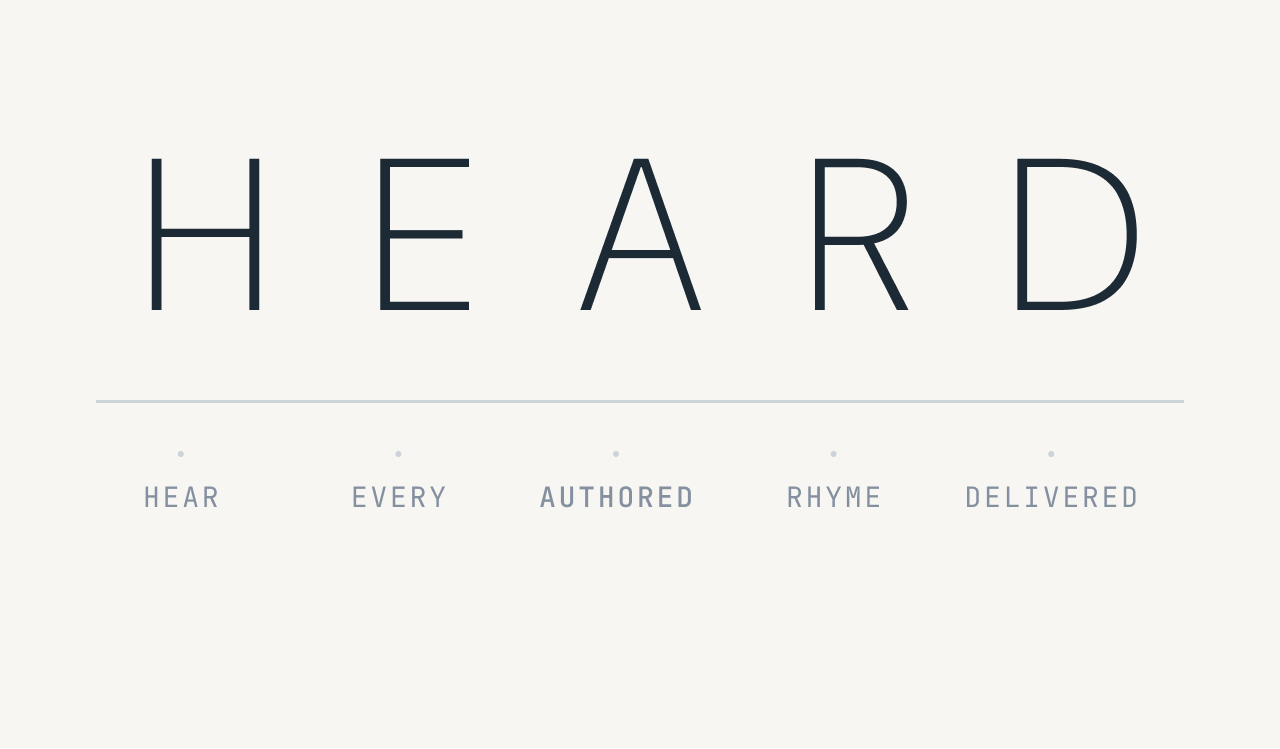
HEARD — Hear Every Authored Rhyme Delivered. This captured what it felt like to finally hear lyrics that had been waiting years to be recorded: heard.
Brand name and acronym
From belief system to brand and visual mark
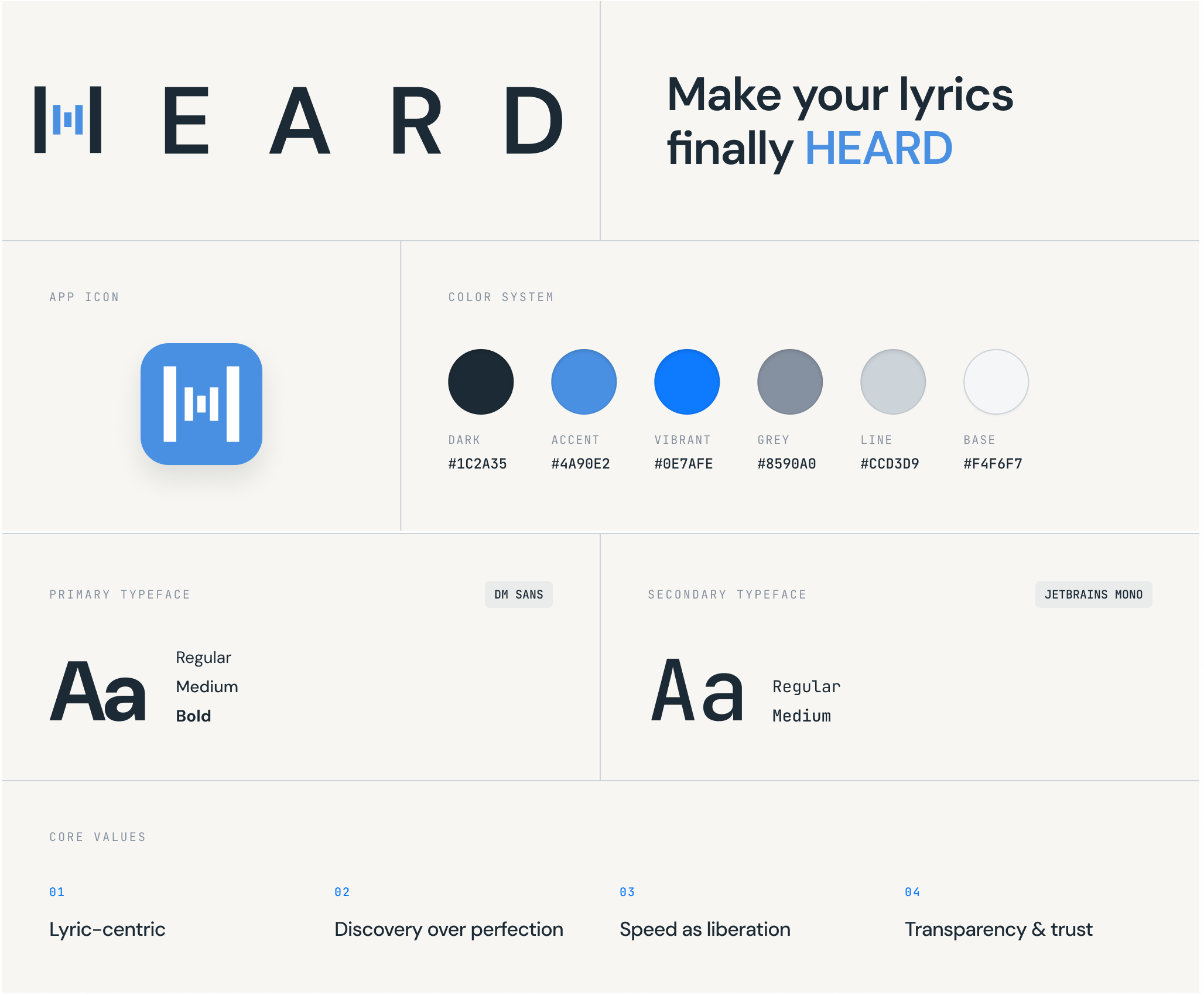
Before designing anything, I ran a structured AI-assisted brand session, working through mission, values, voice, audience, typography, and color. The AI asked the questions; I answered them. It wasn't generative; it was clarifying. The resulting guidelines became the source of truth for every design decision that followed.
The logo came from the same principle: AI as direction-finder, not finisher. What the generations got wrong was as instructive as what they got right, and those iterations became the brief I took into Figma. The outcome was intentional in a way that pure generation couldn't have produced.
"Apps are now commodities. Brand is the differentiator. HEARD was built by the user it was built for."
Brand specimen
Designing the creation form
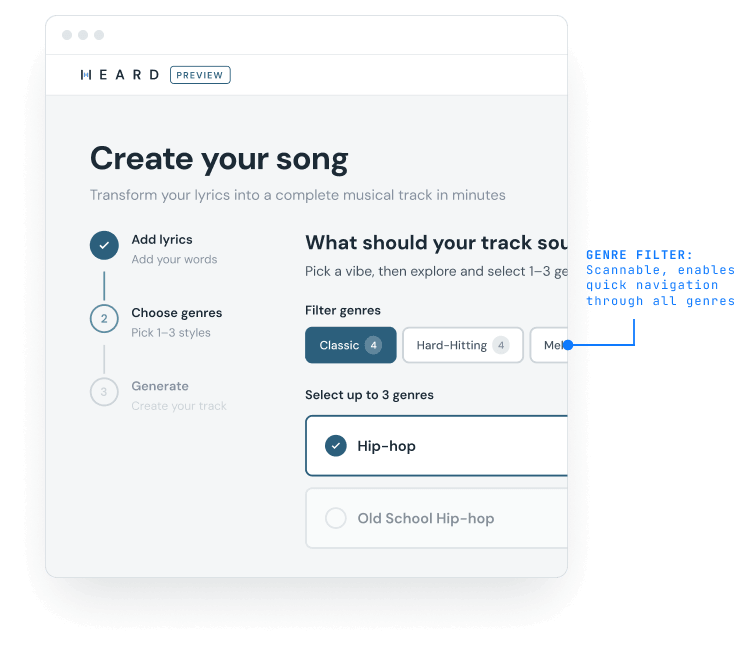
The core of the app design was the creation form: lyrics in, genre selected, generation initiated. I used AI to produce multiple variations, comparing and deciding rather than designing each option sequentially. The decisions were guided by form design principles, usability research findings, and brand guidelines. The output wasn't AI-generated design; it was AI-assisted design judgment.
Form design: genre selection
Lyrics in. Tracks out.
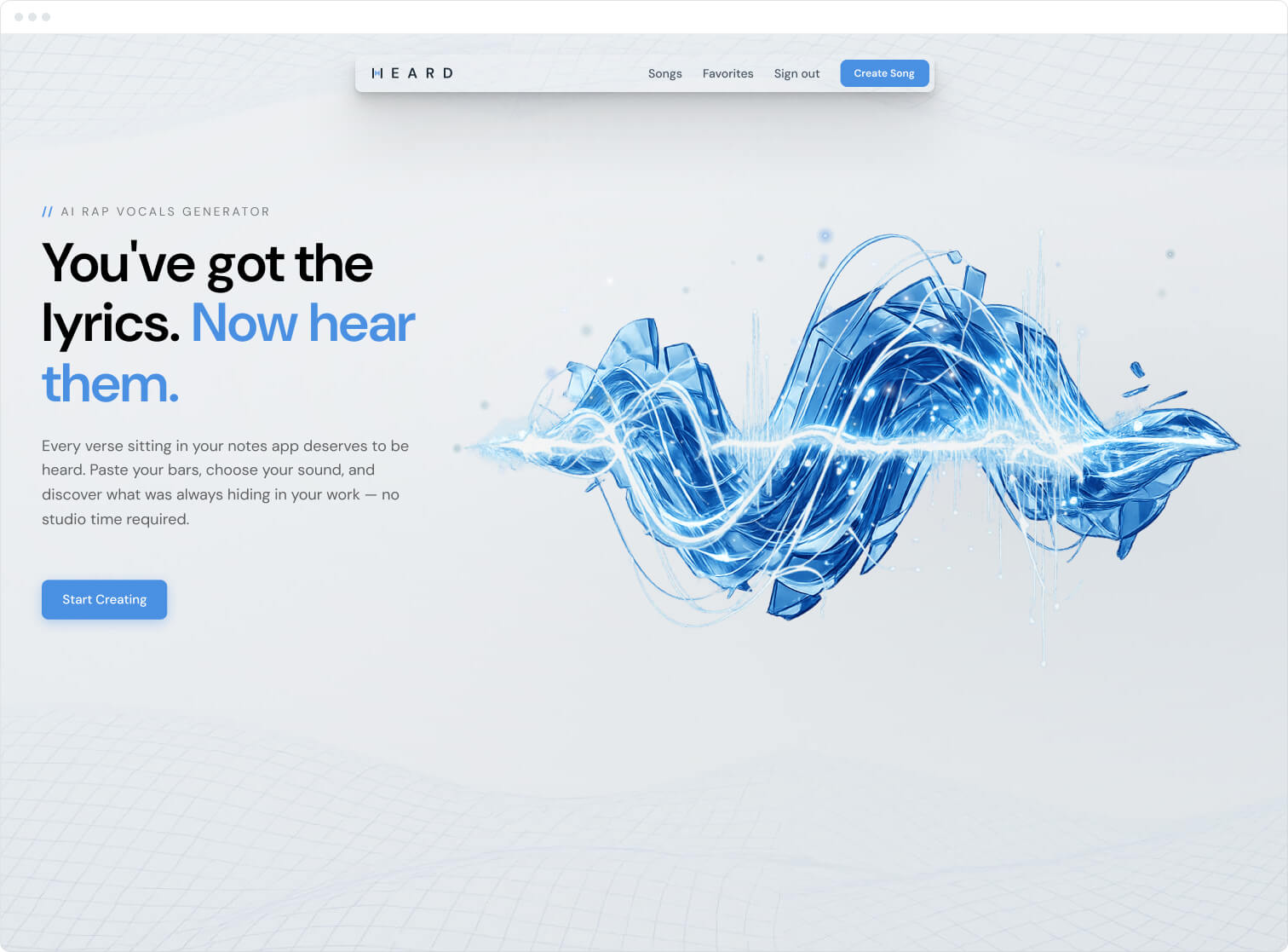
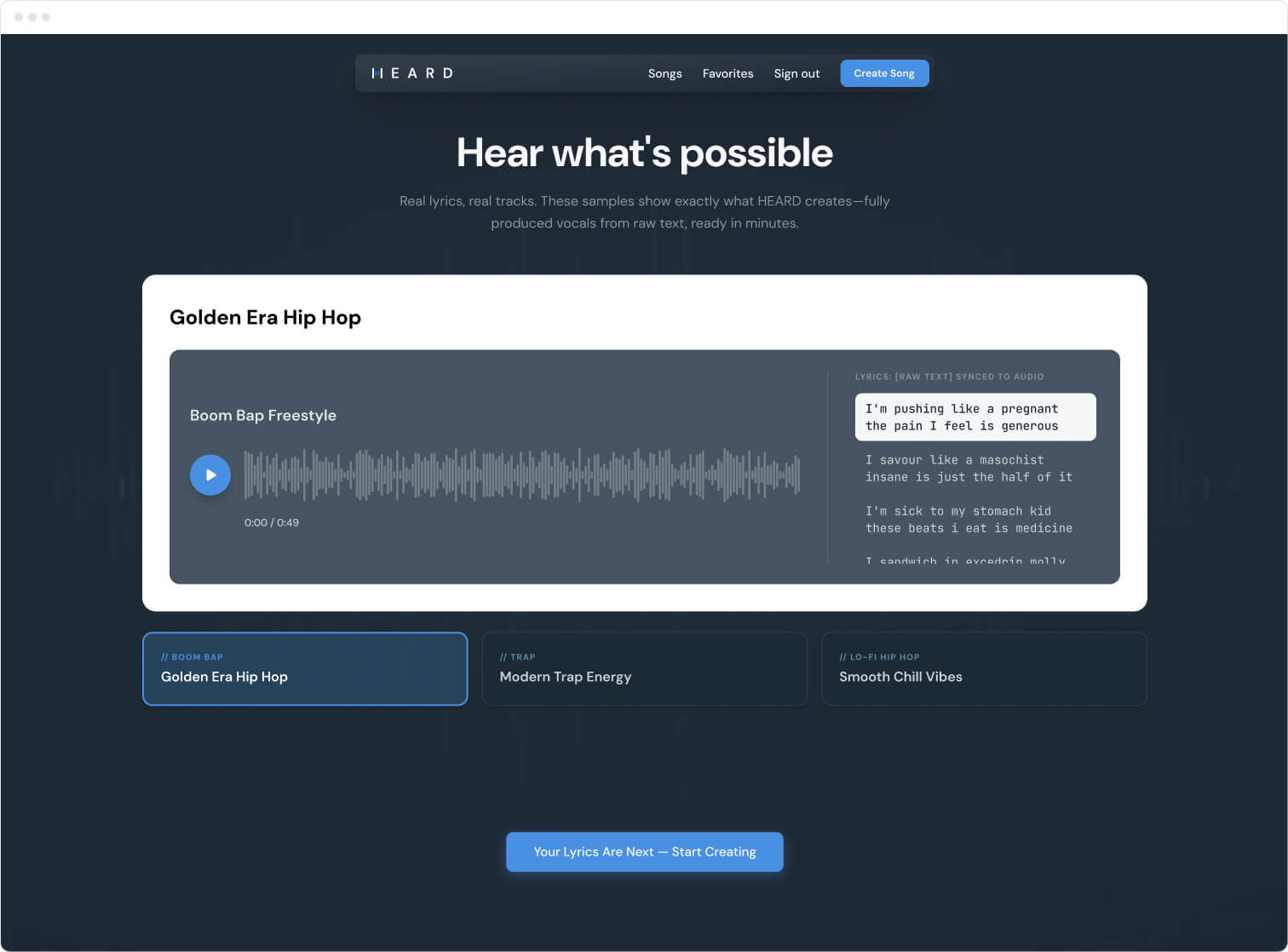
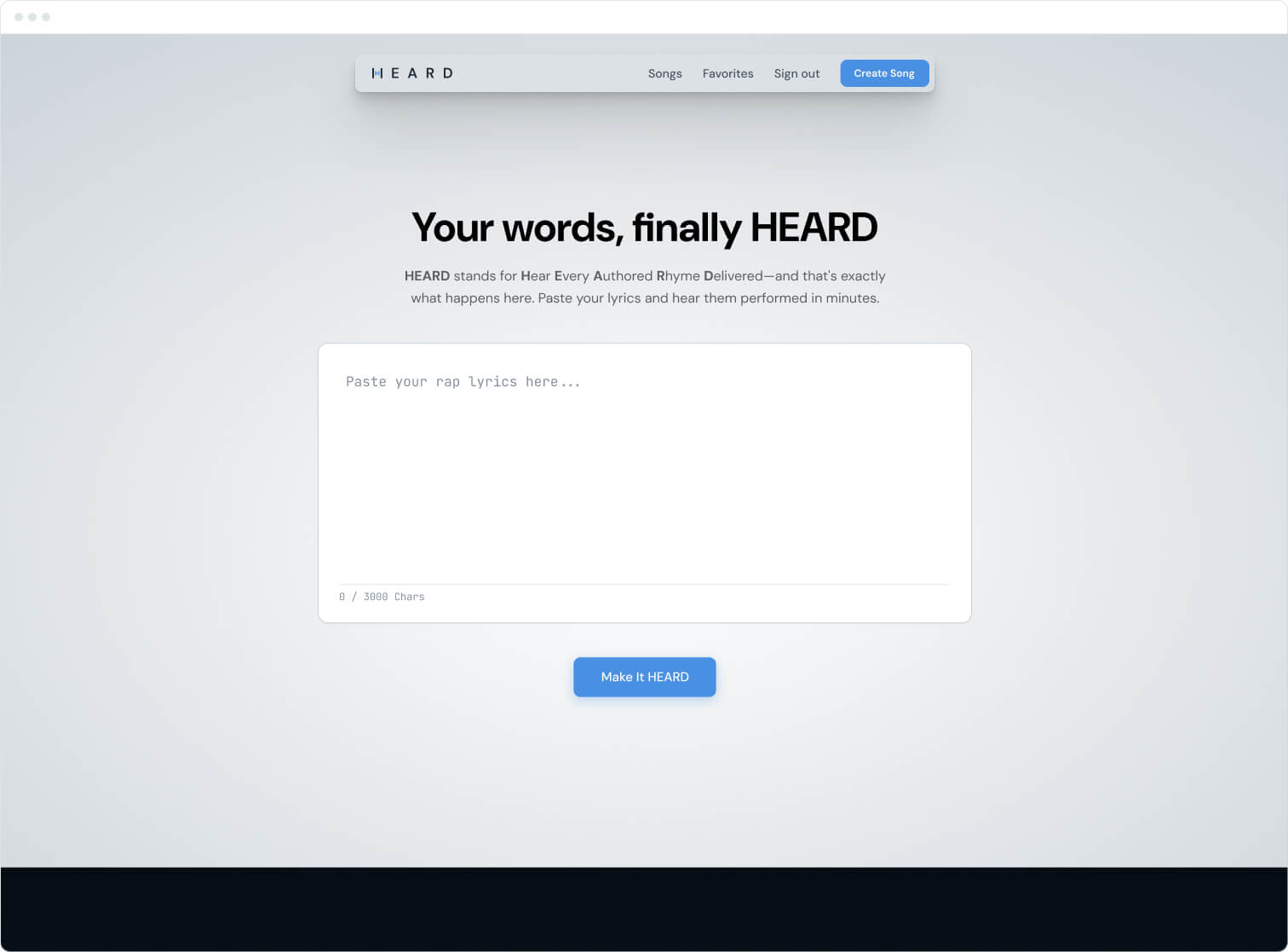
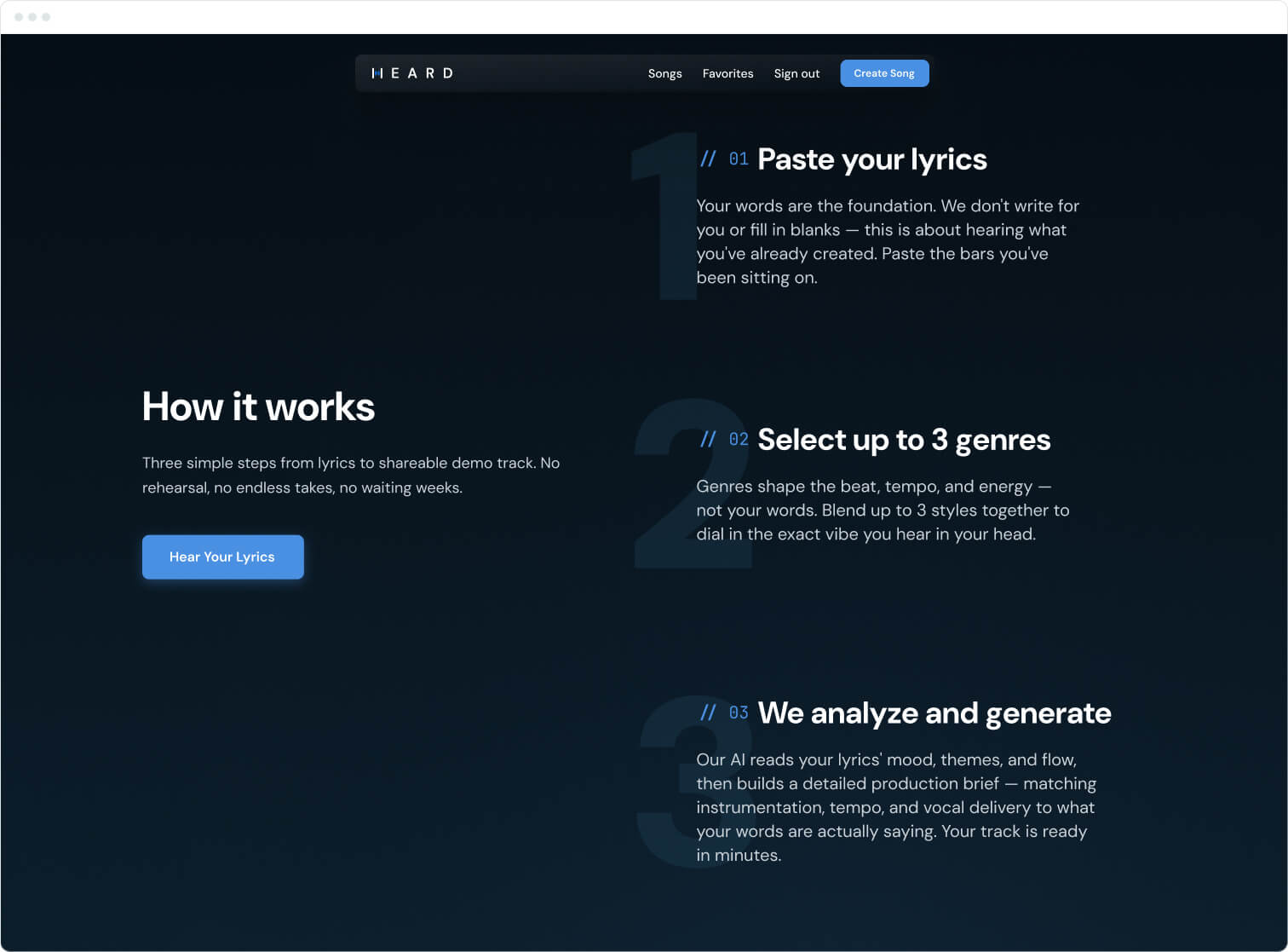
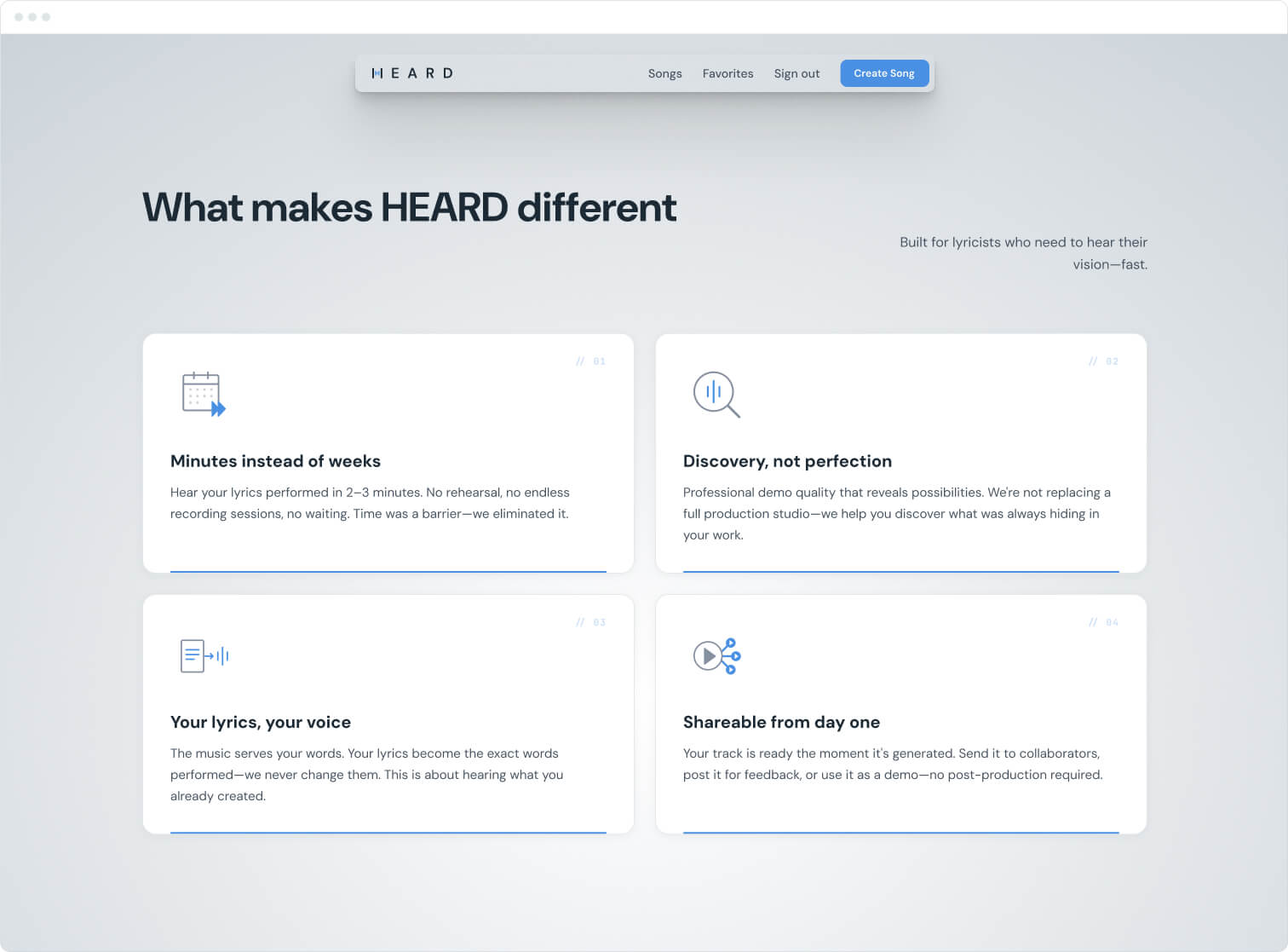
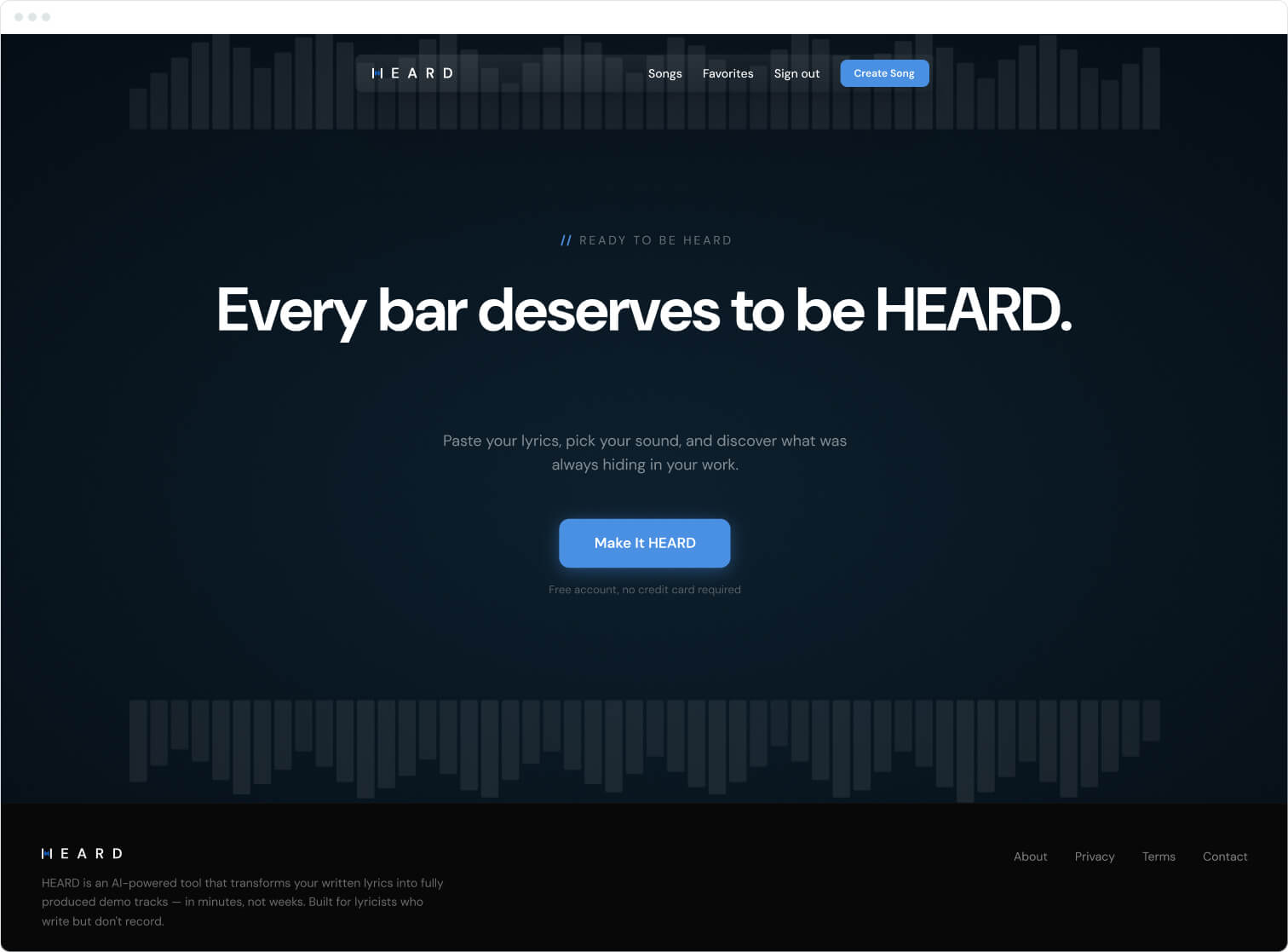
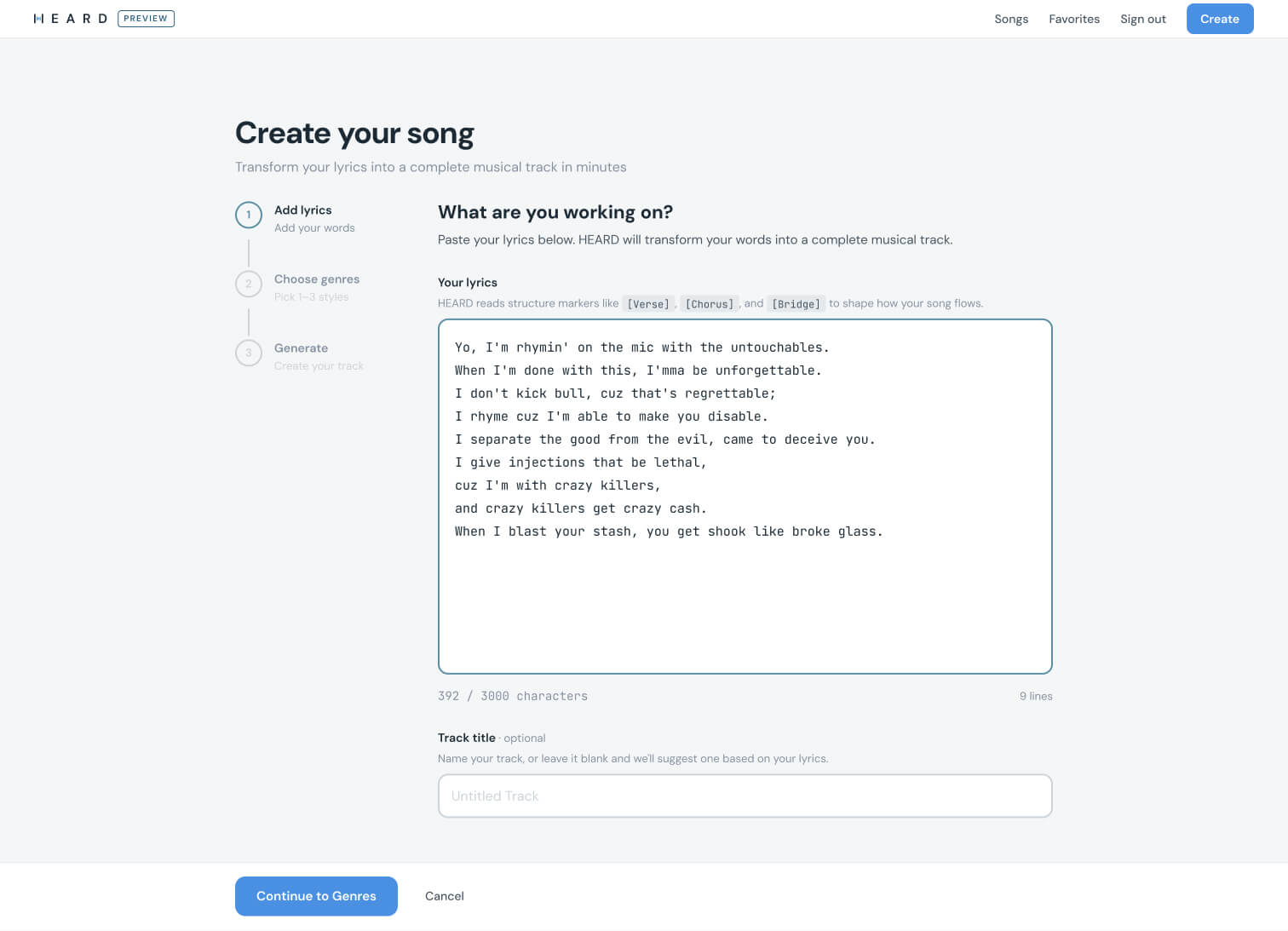
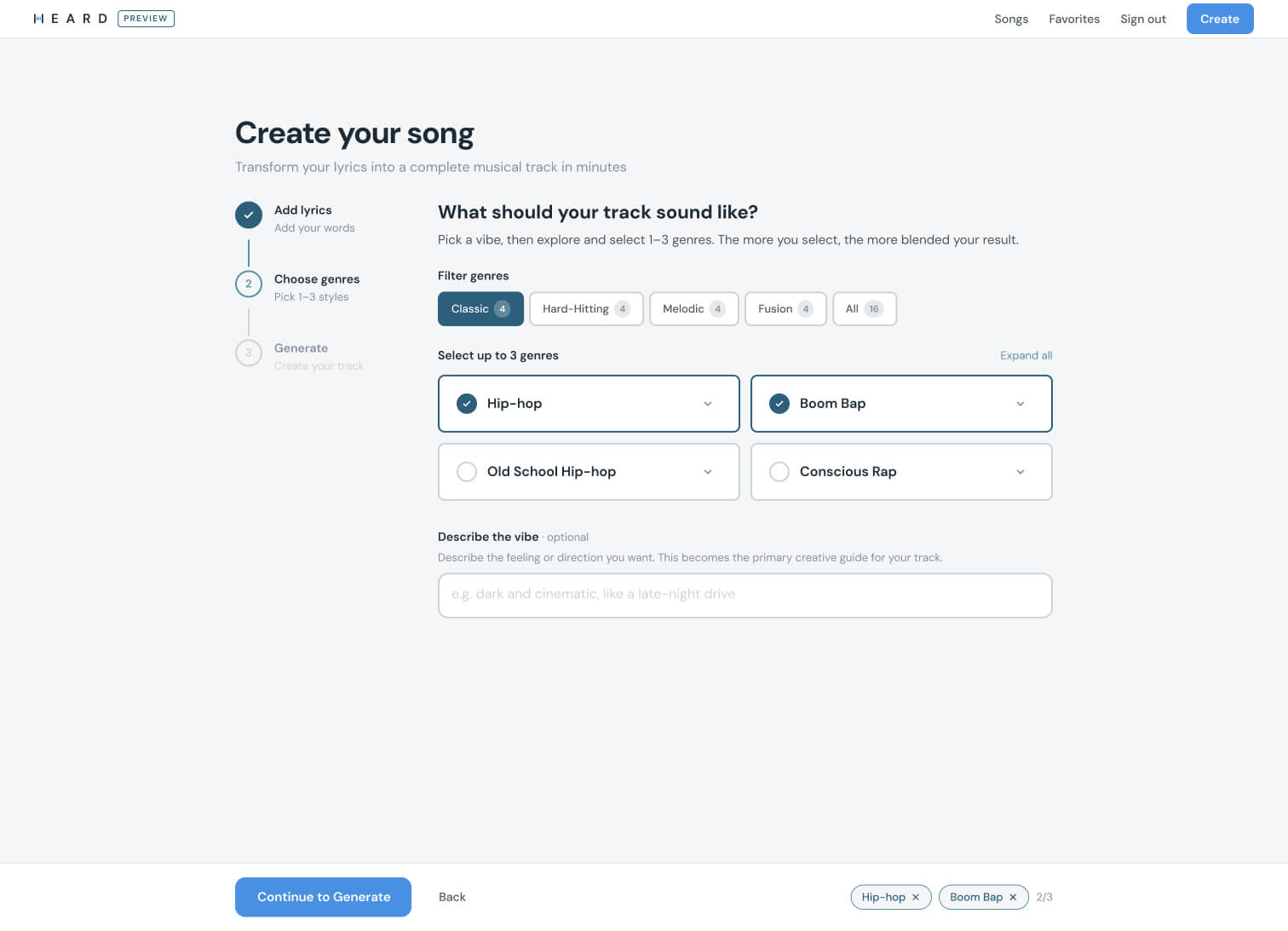
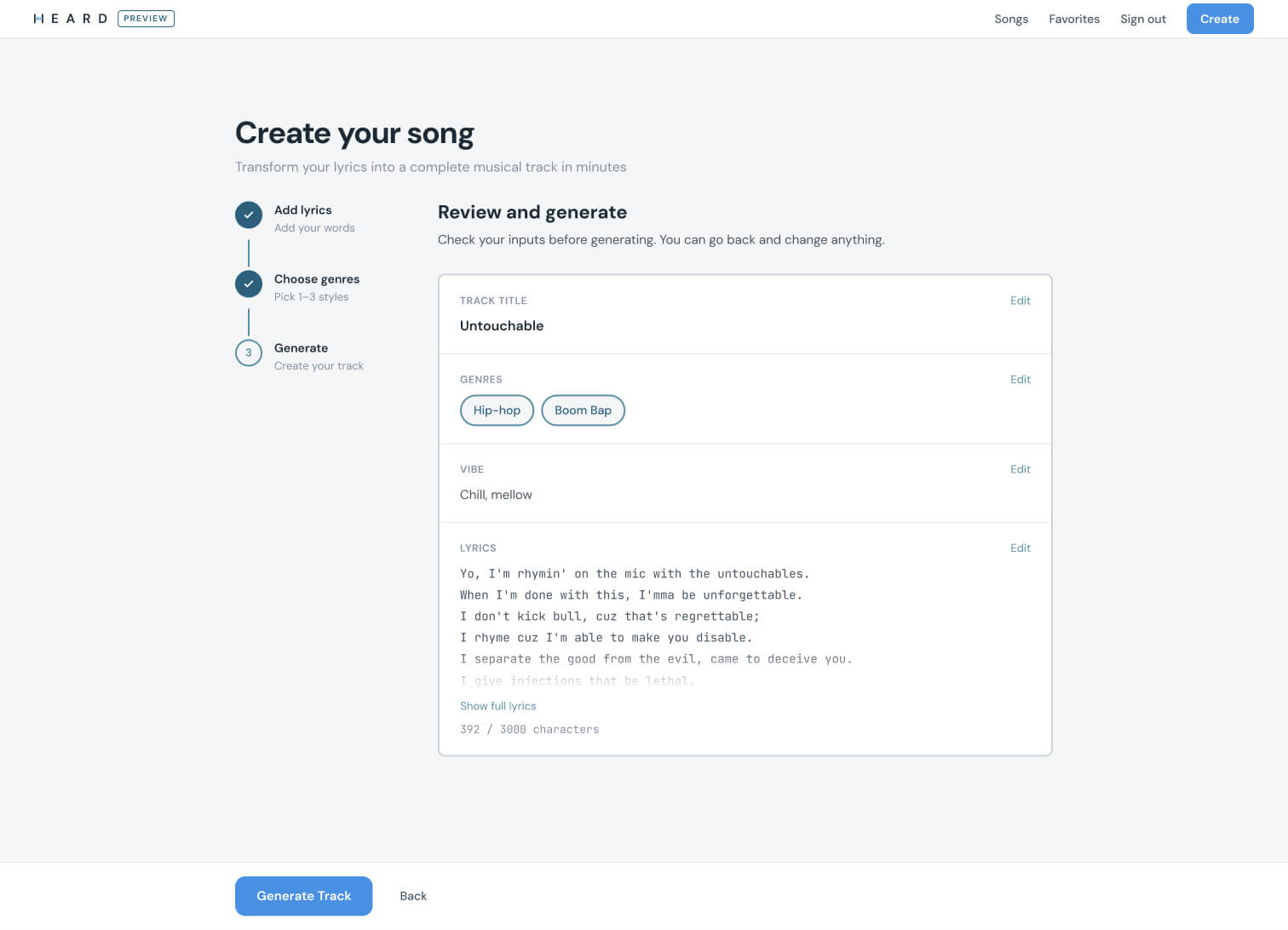
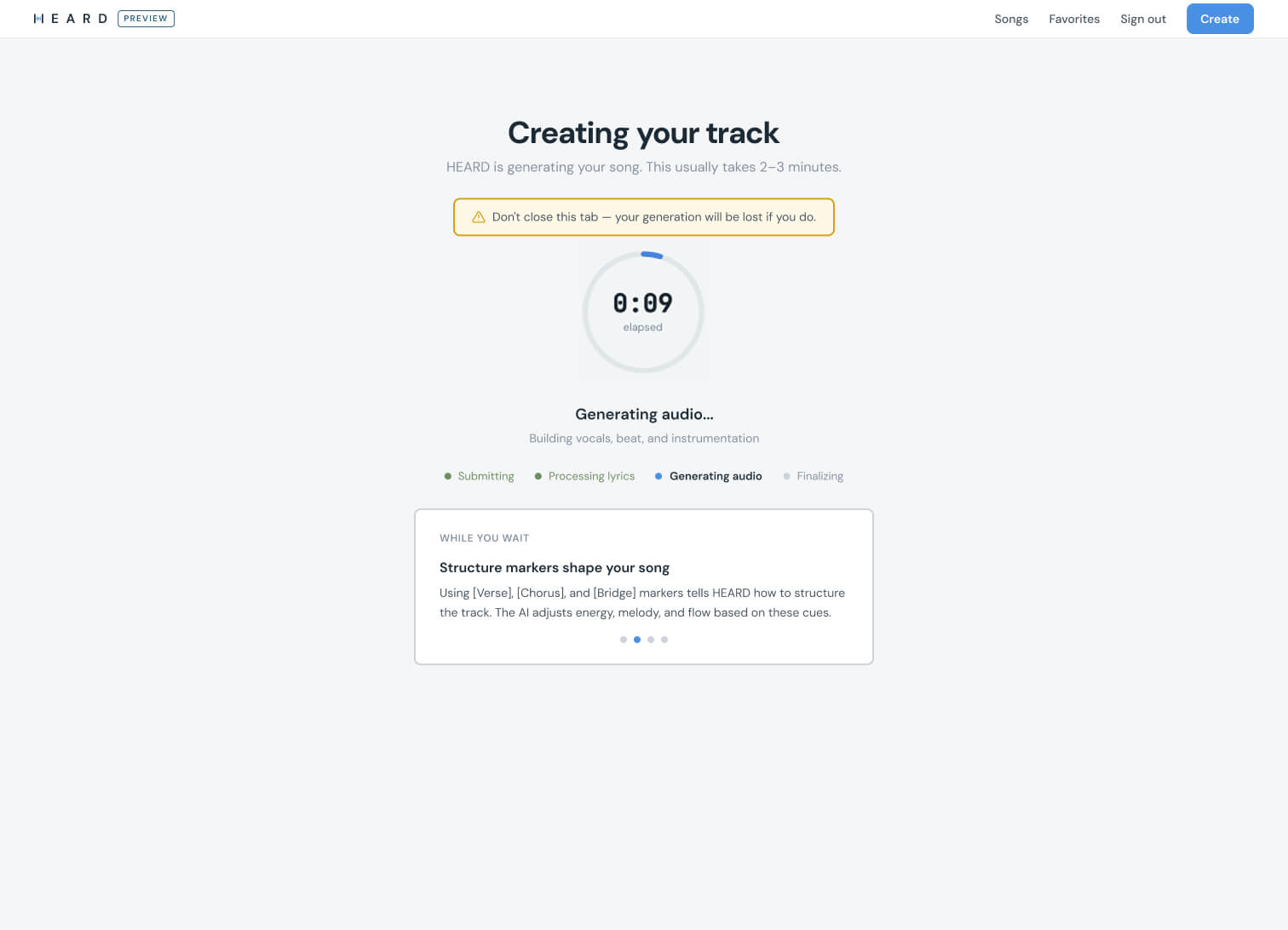
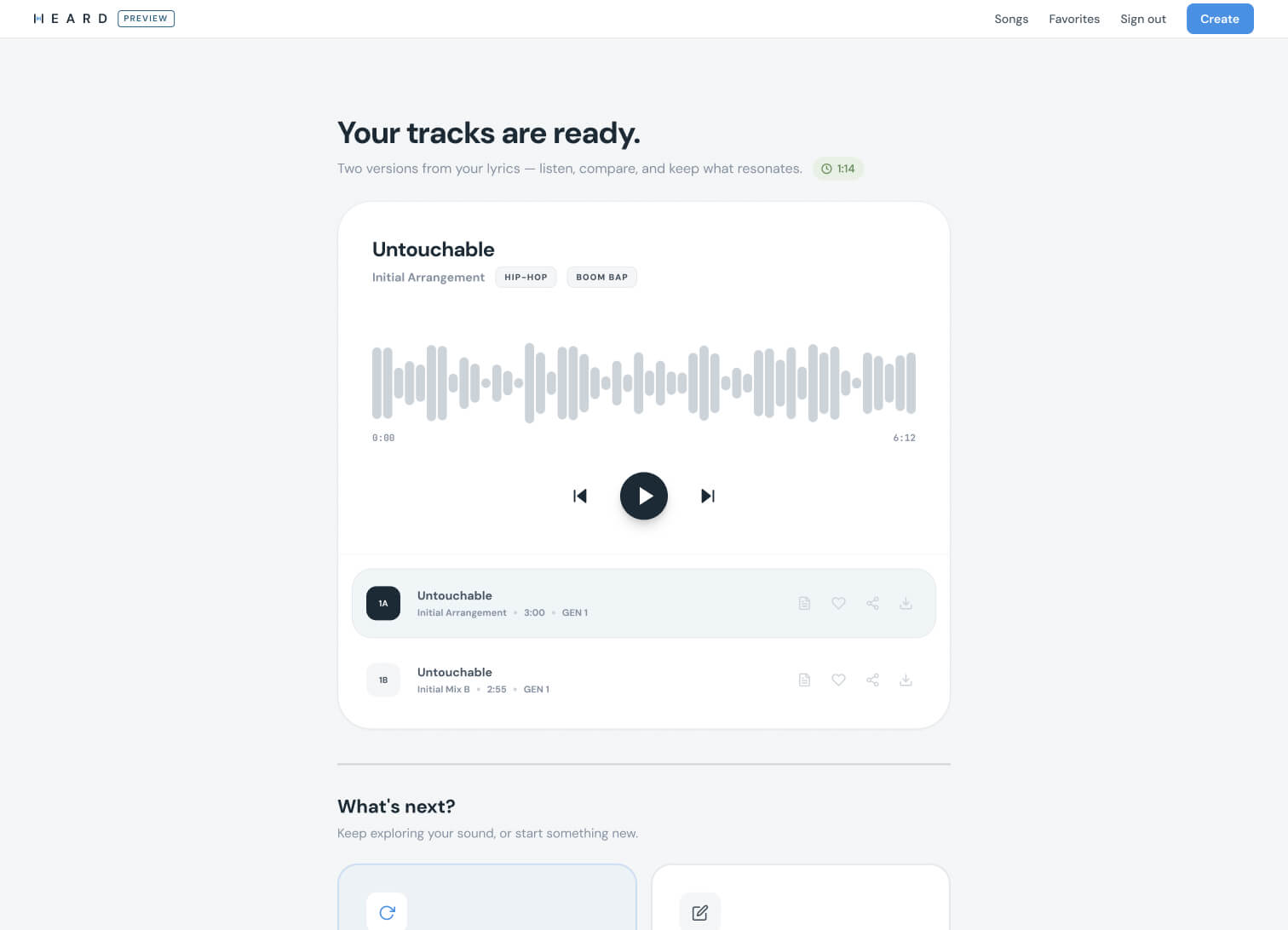
The part where it had to actually work.
The design was far enough along to begin real development. The throwaway prototypes I'd built throughout were useful for testing ideas, not suitable for real users. A production-ready web app is a different thing: authentication, persistent state, responsive layouts, version control, reliable hosting. I set up a local development environment with an AI code assistant and started building.
Building the signup flow pushed me into product strategy in a way the earlier design work hadn't. I couldn't maintain an open-access product alone. But I needed real users to learn what actually needed improving, and I wanted them to feel like they were joining something, not just creating another account.
Personal request form, a 7-day review window, a unique invite link by email. Users choose Google, Spotify, or email. They land on a welcome screen that orients them to the 3-step flow before they touch anything. Every state (authenticated, unauthenticated, expired invite, returning user) had to be designed and built.
Neither of us could have built it alone. That's what AI-era design leadership looks like.
The division of labor was clear: I specified what should happen in each scenario (product behavior, edge cases, user states), and the AI figured out the technical implementation. I reviewed the output, flagged what wasn't right, and fed that back in.
Knowing what should happen in a product is a design skill, not a technical one. The AI made suggestions; I surfaced scenarios it hadn't anticipated. That loop (instruct, build, refine) is what got the app to completeness. The instruct step required the most judgment.
The product is live. Real users. Real feedback.
HEARD launched in private preview with a hand-selected group of users: personal invitation emails sent to people I knew would give honest feedback. No public announcement, no waitlist of thousands. Just early-stage signals from real people.
The platform is running, users are generating tracks, and the feedback loop is open.
Eight hours of focused production work used to stand between a finished lyric and a produced demo. Now I paste the lyrics and press generate. Three minutes later, I have two versions to choose from. That's what HEARD does.
Every tool required judgment at every step. Output quality was entirely dependent on the inputs, and those inputs came from 18 years of design experience.
AI-assisted self-interview and usability study weren't substitutes for real user research; they were genuine methods that put the builder in the mindset of the user.
Depth of understanding is the competitive advantage. A designer who can direct AI precisely can now close the gap between insight and shipped product, alone.
Anyone can generate a lyrics-to-music tool right now. What can't be generated: branding that feels genuine, made by someone who understands the problem intimately.
AI expands what's possible. That makes scope discipline more important. Knowing what to leave out (and being honest about why) is product maturity.
I know how to direct AI and still own the craft. If you're building a team ready for what design leadership looks like now, let's talk.
Get in touch →